

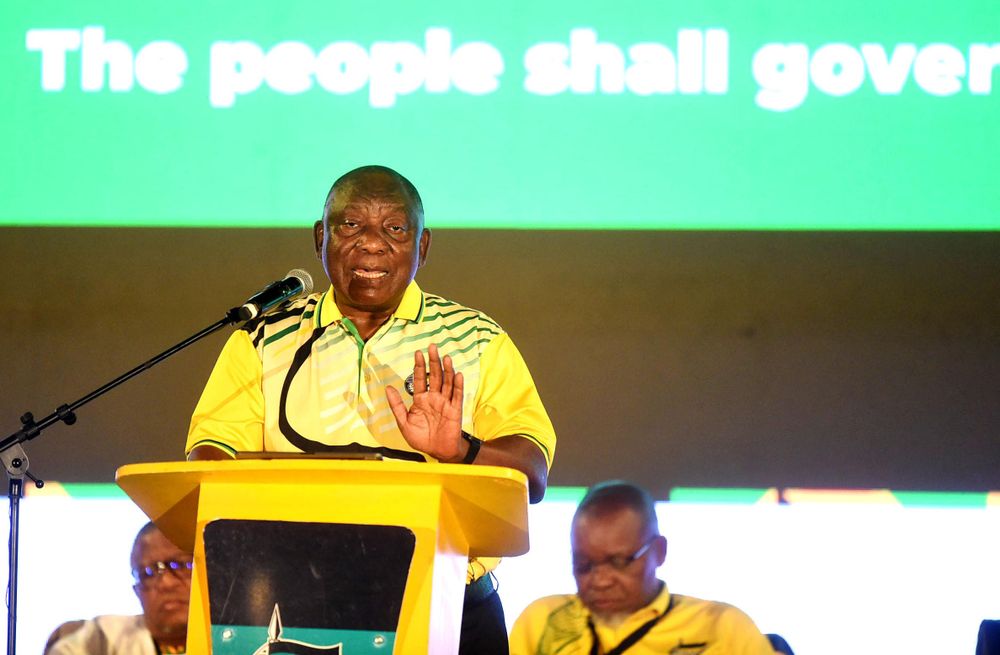
President Cyril Ramaphosa says the government must do away with tenders, especially for basic services, warning that the practice has milked the public institutions dry and opened the door to tender manipulation, inflated prices and bribery.
Speaking at the ANC’s 5th National General Council (NGC) in Boksburg on Monday, he declared that the state must urgently reclaim basic functions that have been handed to private contractors for years — often at enormous public cost.
He argued that the model has not only drained state resources, but also perpetuated job insecurity for thousands of workers whose livelihoods depend on short-term contracts.
“Outsourcing opens the door to corruption — with many cases of tender manipulation, bribery, overpricing, and the use of front companies,” he said.
“Workers become vulnerable because their jobs are tied to tenders. When the tender ends, so does their employment. We need to give dignity to our people by ensuring they gain skills and have permanence in their jobs through public sector work.”
Ramaphosa stressed that rebuilding the state’s internal capacity was essential to improving service delivery and restoring public trust.
He said the ANC must “act decisively” to reverse the outsourcing of core functions and revive technical skills within departments that have become overly dependent on private contractors.
The president’s remarks come as the National Treasury prepares to implement the long-awaited Public Procurement Act, which will overhaul the country’s procurement regime and establish a new Public Procurement Office.
Ramaphosa said the reforms must target both corruption and inefficiency while ensuring procurement is used to support black- and women-owned businesses that produce goods and services directly, not intermediaries who act as costly “middlemen”.
“Too many tenders are issued to companies without the competence to deliver… This wastes public funds, encourages corruption and does not advance real economic empowerment,” he maintained.
Ramaphosa used the platform to argue that South Africa is edging toward a long-awaited economic turning point, saying Treasury’s projections show the potential for stronger growth over the next five years if policy commitments are implemented.
Jobs, he insisted, will follow sustained economic expansion.
But he warned that meaningful recovery will require a capable state that does not depend on outsourcing basic functions to private interests.
IOL Politics
.