

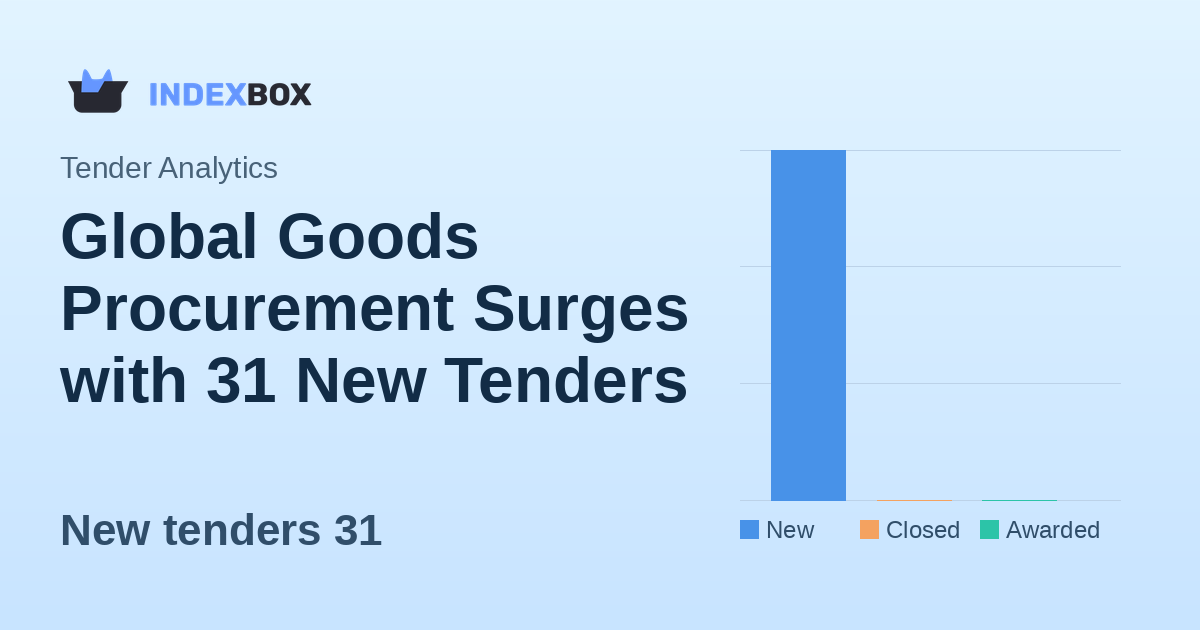
The global Goods procurement market saw significant activity on February 10, 2026, with 31 new tenders published and no closures or awards recorded. South Africa and Pakistan dominated the geographical distribution, while the market showed a relatively short average bid window of under 19 days. This analysis examines the day’s tender metrics, geographical patterns, sector breakdown, and market dynamics within the Goods category.
New tenders31
Closed tenders0
Awarded tenders0
Bid window18.7 days
South Africa
Pakistan
United States
Canada
Goods
Miscellaneous
Equipments
Electrical Items
Full analysis
Market Overview: High Volume Day for Goods Tenders
February 10, 2026, marked a day of substantial procurement activity within the global Goods category, with 31 new tenders published across various markets. This represents a significant volume of new business opportunities for suppliers worldwide. Notably, the day saw zero tender closures and zero awards, indicating that while new opportunities emerged, no existing procurement processes reached their conclusion on this date.
The absence of closed or awarded tenders suggests that procurement teams were focused on initiating new sourcing activities rather than finalizing existing ones. This pattern could reflect seasonal procurement cycles, budget allocation timelines, or specific project initiation phases within public and private sector organizations. The concentration of activity in new tender publication creates a dynamic environment for suppliers looking to expand their contract portfolios.
With no awarded tenders reported, the competitive landscape remains open across all published opportunities. Suppliers have the chance to engage with these new tenders without facing immediate competition from already-awarded contracts. This situation emphasizes the importance of timely response and strategic bidding in the current procurement environment.
- 31 new tenders published in Goods category
- Zero tender closures recorded
- Zero awards finalized
- All activity focused on new opportunity creation
Geographical Distribution: South Africa and Pakistan Lead Global Activity
The geographical distribution of Goods tenders on February 10, 2026, reveals a concentrated pattern, with South Africa and Pakistan accounting for the vast majority of procurement activity. South Africa led with 16 tenders, representing more than half of the day’s total volume, while Pakistan followed closely with 13 tenders. This dominance suggests focused procurement initiatives within these two markets.
The United States and Canada each contributed a single tender, indicating more limited activity in North American markets on this particular day. The heavy concentration in South Africa and Pakistan could reflect specific national procurement programs, infrastructure projects, or supply chain initiatives that required substantial Goods sourcing. This geographical pattern offers valuable insights for suppliers targeting specific regional markets.
For international suppliers, this distribution highlights the importance of monitoring emerging markets alongside traditional procurement hubs. The strong showing from South Africa and Pakistan suggests robust public sector spending or private sector investment in these regions, creating opportunities for both local and global suppliers with the capability to meet regional requirements and compliance standards.
- South Africa: 16 tenders (51.6% of total)
- Pakistan: 13 tenders (41.9% of total)
- United States: 1 tender
- Canada: 1 tender
Sector Analysis and Bid Window Dynamics
Within the Goods category, the sector breakdown shows that while all 31 tenders fall under the broader Goods classification, more specific subcategories provide additional insight. Miscellaneous Goods led with 8 tenders, followed by Equipments with 2 tenders, and Electrical Items and Vehicles each with 1 tender. This distribution indicates diverse procurement needs across different types of physical products.
The average bid window of 18.74 days presents a relatively short timeframe for supplier response. This 19-day average suggests that procurement entities are operating with efficient timelines, requiring suppliers to be prepared with necessary documentation, pricing, and compliance materials to respond quickly to opportunities. The compressed timeline may favor suppliers with established bidding processes and readily available resources.
The short bid window could reflect urgent procurement needs, streamlined tender processes, or specific project timelines that require rapid supplier selection. For procurement professionals, this emphasizes the importance of clear tender documentation and efficient evaluation processes. For suppliers, it underscores the need for proactive opportunity monitoring and prepared response capabilities to compete effectively within constrained timeframes.
- Miscellaneous Goods: 8 tenders
- Equipments: 2 tenders
- Electrical Items: 1 tender
- Vehicles: 1 tender
- Average bid window: 18.74 days
Procurement Implications and Strategic Considerations
The day’s tender metrics within the Goods category reveal several important implications for procurement professionals and suppliers. The high volume of new tenders coupled with zero awards creates a market environment rich with opportunity but lacking in immediate resolution. This suggests that competitive tension will build as these tenders progress through evaluation phases in the coming weeks.
The geographical concentration in South Africa and Pakistan presents both opportunities and challenges. Suppliers with established presence or partnerships in these regions may have competitive advantages, while those looking to enter these markets may need to develop local knowledge, compliance understanding, and logistical capabilities. The limited activity in North American markets on this particular day doesn’t necessarily indicate reduced procurement overall, but rather highlights the importance of monitoring multiple regions for comprehensive market coverage.
The relatively short average bid window of under 19 days requires suppliers to maintain readiness for rapid response. This includes having updated company documentation, financial records, technical specifications, and compliance certificates readily available. Procurement teams designing these tenders should ensure that shorter timelines don’t compromise the quality or competitiveness of responses by providing clear requirements and adequate information.
Looking forward, stakeholders should monitor whether this pattern of high new tender volume continues, and watch for corresponding increases in closure and award activities in subsequent periods. The current data suggests an active procurement pipeline that will likely result in significant contract awards in the near future, making timely and strategic bidding essential for market success.
- High opportunity volume with delayed resolution creates competitive buildup
- Regional concentration requires targeted market strategies
- Short bid windows demand supplier preparedness and efficiency
- Diverse Goods subcategories indicate varied procurement needs
- Monitoring tender progression to closure/award will be crucial
Related tenders
Source: https://www.indexbox.io/blog/tenders-2026-02-10-tender-analytics-goods/
.