

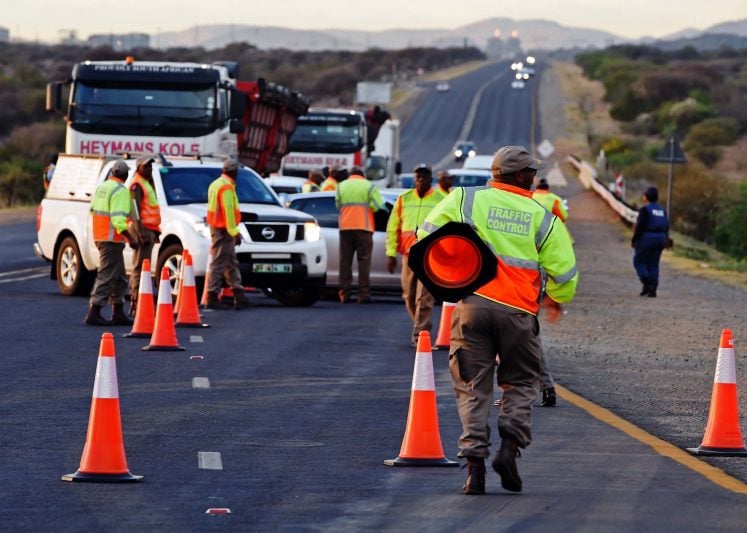
South Africa’s transport department has issued a tender seeking a contractor to outsource the rollout and operation of core Administrative Adjudication of Road Traffic Offences Act (Aarto) services.
The tender invitation, published on 8 December 2025, is for the “Appointment of a turnkey contractor for the rollout and operation of the Aarto core services for 60 months”.
The tender’s closing date was initially set for 3 February 2026, but was later extended to 13 February. The Organisation Undoing Tax Abuse (Outa) is demanding answers about why outsourcing is required.
It is concerning that, after nearly 16 years, South African transport authorities don’t have sufficient internal capacity to roll out and enforce the Aarto system without outsourcing to private companies.
Outa has formally written to Transport Minister Barbara Creecy and to the Road Traffic Infringement Agency (RTIA) chairperson, Bonolo Ramokhele, to highlight its concerns.
“Outa questions whether this late extension meaningfully mitigates the risks created by the original compressed timetable and warns that the process remains rushed for a procurement of this scale,” it said.
It further warned that the rushed process could carry serious implications for fairness, competition, and transparency.
“Outa is particularly concerned that the tender appears to outsource core administrative and enforcement-support functions that already exist within government,” Outa said.
“The Road Traffic Management Corporation, through the NATIS platform, already manages national traffic administration systems that interface directly with Aarto processes.”
It added that duplicating this capacity through a private contract could lead to higher costs, operational complexity, and weakened institutional capacity.
“The organisation also questions the appropriateness of introducing private commercial incentives into systems that support traffic infringement enforcement,” Outa said.
Outa CEO Wayne Duvenage explained that enabling private entities to benefit from administrative processes linked to fines creates perverse incentives and erodes trust.
“That is exactly what Aarto does not need. Traffic enforcement is not meant to operate as a profit-driven exercise,” he said.
Outa is calling on Creecy and the RTIA to urgently explain the rationale for the procurement approach, make the business case behind it public, and clarify why existing state capacity is being overlooked.
“Aarto already suffers from a credibility deficit,” said Duvenage. “Pushing through a complex, high-risk outsourcing deal under tight timelines only deepens public suspicion.”
“If this system is to be lawful, trusted, and effective, the procurement process must be beyond reproach.”
15 years of delays and counting

The Aarto system was introduced as a pilot project in Pretoria in July 2008 and in Johannesburg in November of that same year.
However, the project has been plagued by delays, with the latest postponement announced by the Department of Transport in a November 2025 statement.
The department said the postponement was based on an assessment of the state of readiness in various municipalities in which the system was set to roll out on 1 December 2025.
The department found deficiencies in the finalisation of the required law enforcement and back office personnel.
Moreover, it found deficiencies in the harmonisation of the current law enforcement systems used by various municipalities and in their funding.
“The Department will soon publish the new proclamation with new staggered implementation dates, the 1 July 2026 being the official implementation date,” the Department of Transport said.
“The phased approach of implementation will still be maintained as initially envisaged.”
The previous phased approach would have seen 69 more municipalities join Johannesburg and Pretoria in adopting phase one of Aarto on 1 December 2025.
The remaining 144 municipalities were set to roll out the system on 1 April 2026, while the licence points demerit system was set to be enforced from 1 September 2026.
If the phased rollout timeline remains the same, the full implementation of Aarto with the demerit points system will only occur around mid-2027.


.